
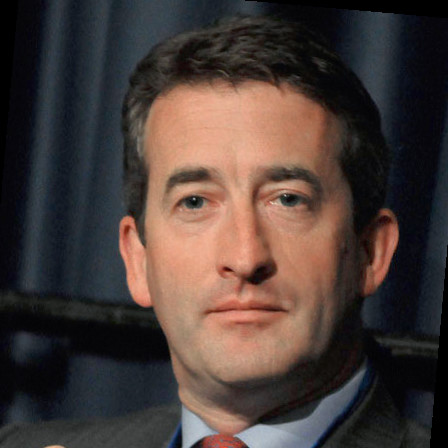
Pushkar Gadam

Senior Executive, Technical Underwriting
Committee secretary


The JHC comprises underwriting representatives from both the LMA and International Underwriting Association (IUA). It explores the key issues that affect the market as a whole.
The JHC has a number of sub-committees, including:
Joint Hull Yacht Sub-Committee
This group is currently looking at a helicopter clause for superyachts in particular and remains concerned by lithium batteries in marine toys. The committee issued a Lithium Battery model clause, JH2024-011A, in 2024.
JH143 Working Party
The JH143 Working Party is reviewing the Shipyard Survey Clause, with the aim of streamlining the clause and providing updated guidance to the market.
Joint Hull Surveys Working Party
A working party has been established to review four survey types that help underwriters assess vessels at time of placement.
Underwriters remain mindful of the PRA requirement that underwriters identify, quantify and manage their cyber exposures, both affirmative and non-affirmative. Further to Lloyd’s more specific mandate on affirming or excluding cover, the LMA has released LMA5402 (cyber exclusion) and LMA5403 (cyber endorsement) to address this issue.
The regulatory definition of cyber remains a challenge as there is no harmonised understanding of what the term encompasses. Work has been done within LMA committees to address this challenge, focusing on software as a basic concept with clear and definite components.
A working party has been established to review the current cyber clause in relation to GPS interference.
Alternative fuels is an increasingly complicated topic as the shipping industry is tasked with the transition towards low-carbon fuels to meet environmental goals. Using alternative fuels has direct safety and exposure implications for insurers, especially in hull and protection & indemnity cover.
The committee liaised with Lloyd’s Register to get a better understanding of the options available and possibilities under investigation. These include methanol, LNG and nuclear.
Increased cost of salvage refers to the higher-than-usual expenses involved in recovering a vessel or its cargo after a marine casualty. As salvage operations can often exceed the insured value of a vessel, those writing hull insurance should be aware of how this can affect premium pricing, coverage limits and the need for deductibles or sub-limits on salvage-related expenses.
Members contributed to the production of the revised LOF Default Agreement, LMA5654A, which is available for use as appropriate and is on the LWR.
The JHC helps to develop and issue wordings for use across the market. To receive email notification of new wordings, please subscribe.
17 Oct 24

04 Apr 24
23 Mar 23
30 Jul 20
29 Jul 20
04 Apr 19
26 Sep 13
15 Jun 09