

“No More Ambiguity” Data Standards and a Vision for a Digitised Market
22nd September 2026
Download the PDF

Operations Director
Perspectives from the LMG’s Data Council and Ruschlikon, 24 June 2026.
Compiled and edited by Damien Seaman on behalf of the LMA, the LMG’s Data Council and Ruschlikon.
Introduction
The London market has talked about digitisation for so long that it’s easy to tune out.
What made the LMG’s Data Council full-day event on 24 June 2026 different was its insistence on specifics. Rather than another abstract digital vision, the day was built around the practical machinery that would make a digital market possible: the Ruschlikon best-practice community, the ACORD Global Reinsurance and Large Commercial (GRLC) messaging standards and the Core Data Record (CDR) for
Open Market, Treaty, Delegated Authorities and Claims – as well as pre-bind placing.
The sessions moved logically from vision to evidence to application. The morning asked what good looks like in a data-driven world; the early afternoon showed, screen by screen and message by message, how several major trading partners have actually built it in the Lloyd’s and company market.
The late afternoon turned to the pre-bind world. Here, the CDR promises to bring the same discipline to placing that Ruschlikon has brought to accounting and claims.
Taken together, the sessions suggest a market that has moved past debating whether to standardise and is now working through the harder question of how – and how fast – adoption can spread beyond the pioneers.

Session 1: Vision of a digital London market
The day opened with a scene-setting session led by Joe Brace (LMA), followed by a roundtable discussion with Clarissa Montecillo (ACORD), Matthew Gouldstone (Velonetic) and Stéphane Flaquet (Lloyd’s).
The associations, the standards body, the central services provider and Lloyd’s appearing on one stage signalled that the vision of a digitised London market is no longer the property of any single institution, but a shared programme.
Brace, Operations Director at the Lloyd’s Market Association, began with a clear message. The London market can become faster, more scalable and more automated by adopting shared data standards, particularly ACORD and the Core Data Record. This will support interoperability, digital contracts, automated compliance, faster quoting and more effective use of AI.
Montecillo then came out guns blazing with the urgency behind the vision – why London’s insurance market needs to do this:
“When I first walked into this building 25 years ago, Lloyd’s was the premier insurance market globally. We could afford to take longer than our competitors. Today, that’s no longer the case. Business is moving to other hubs that are faster, cheaper and becoming better in terms of expertise.”
“If we want to stay competitive globally, then we need to make it easier to do business and reduce frictional operational costs.”
Why do data standards matter?
To strip out cost and complexity. One panellist described shadowing a Velonetic employee processing an endorsement for a known risk that took a whole day. Without consistent definitions and formats, platforms and firms can’t reliably exchange information and data stays trapped in documents.
Data comes before technology
The panellists returned to this repeatedly. Standardise the data, simplify the business processes and only then choose the technology: “It should be data first, process second, tech last.”
Accurate, structured data should be captured at submission, quotation and placement, not cleansed after binding. Moving data “to the left” (pre-bind) reduces downstream checking, re-keying, errors and delays.
Firms must own the quality of their data
Standards won’t succeed unless participants take responsibility for the data they create. The market can’t keep relying on downstream organisations like Velonetic to cleanse poor-quality information.
And if anyone thinks agentic AI can fill that gap, they have another thing coming. AI helps only where data is accurate, processes are understood and people remain accountable.
On the investment case, the panel diverged
One insisted the business case “is harder than for many other kinds of investment because it’s a challenge to say how this will make us better off or more efficient as a broker or carrier.” Another countered: “Blueprint Two was really good at helping build the business case. It was ‘have a look at this because this is what the market’s doing’.” Which gave Joe another chance to note there are several case studies out there, which are useful precisely because they show what the market is already doing.
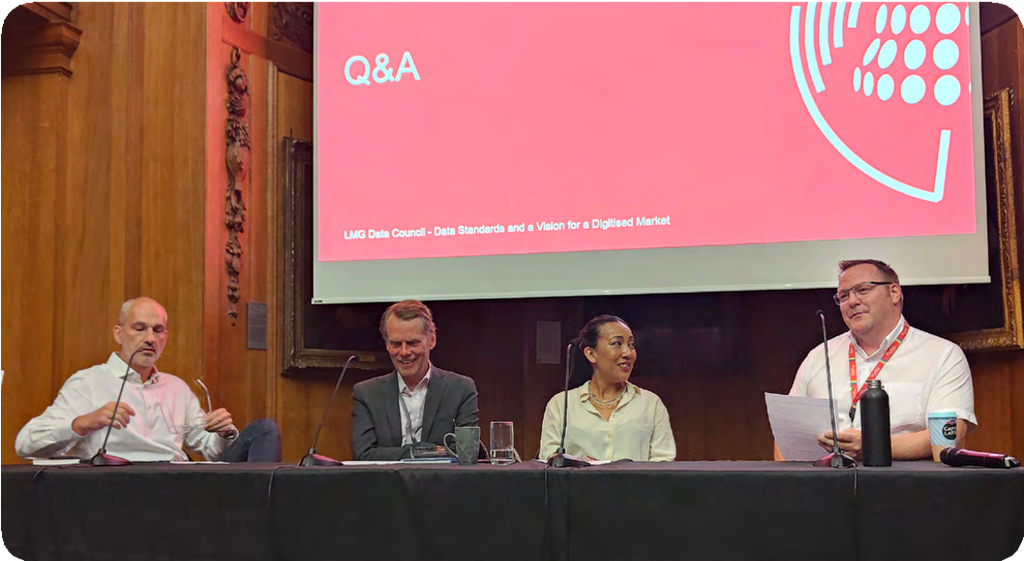
Session 2: What does good look like? The Ruschlikon and ACORD story
Troy Hughes (Aon) and Simon Squires (AXA XL), introduced by Kim Darrington (IUA), traced the Ruschlikon initiative from its origins – a small group of like-minded brokers and reinsurers gathering in 2008 at the Swiss Re Centre of Global Dialogue, based in Ruschlikon near Zurich – to today’s expanded community spanning eAccounting, claims and, more recently, ePlacing.
The founding logic remains unchanged today. It’s to reshape the (re)insurance industry, enhance client service and reduce operational cost, as well as digitising the end-to-end process, replacing paper and integrating placing with back-office data through ACORD standard messages.
Hughes and Squires came armed with numbers. Results reported by member firms, presented under the initiative’s own candid banner of “anecdotal evidence that it works”, included:
- 50% improvement in claims payment turnaround
- 75% automation rate for technical account statements within a year of implementation
- 80% reduction in wire transfer and bank fees for AXA XL achieved by Aon’s US operation through net settlement
The striking thing was that the “key wins” for brokers and carriers were essentially the same list:
- One system
- No rekeying
- Fewer bespoke point-to-point builds
- Faster and better-quality quotes
Standards are a clear and proven way to strip out duplicated cost.
The argument has fundamentally changed since the initiative’s inception in 2008 because the market is already past the point of critical mass with the number of companies that are onboard.
“The number one point is showing everyone: look, this isn’t a pipe dream. This is happening.”
In the early days, making the case meant hacking through uncharted territory. Now brokers and insurers have charted a path for others to follow. It’s particularly significant that leader brokers are taking this seriously.
The result is that after two decades of hard work, the remaining blockers aren’t technical at all. Every market platform in London now has a gateway. With no infrastructural or technological barriers, the connections are there to be made. The main blockers are awareness and acceptance that there’s a problem.
“Everybody wants to talk about AI. But before you get to AI, you need to build a foundation of structured data and data quality. Put the connectivity and data structures in first, it was argued, then let AI superpower them, because AI projects built on paper documents and legacy processing “will get you the wrong answers.”
The payoff for those who do connect is dramatic, with the cost of processing and servicing online business roughly halving.

Session 3: From standards to practice: Swiss Re and Guy Carpenter (Marsh Re)
If the morning made the case for digitisation, the afternoon – after a lunch break for cheese and chat – was about showing the proof in exhaustive detail.
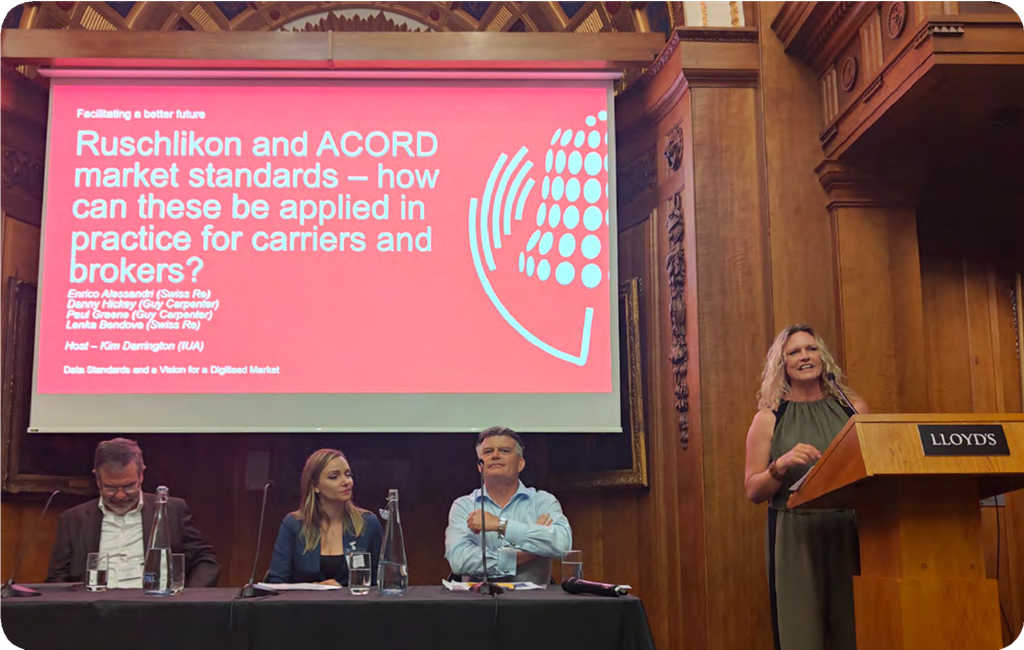
Enrico Alessandri and Lenka Bendova (Swiss Re) with Danny Hickey and Paul Greene (Guy Carpenter), again hosted by Kim Darrington, walked through what is arguably the market’s longest-running ACORD messaging partnership.
Swiss Re and Guy Carpenter (now Marsh Re as of 01 September 2026) began building their solution in late 2007 and went live in 2008. The session walked through it in unusually granular detail, from premium messages and claim movements to two-way queries and financial account settlement.
Danny Hickey was a processing technician at Guy Carpenter when it all started – and that vantage point shapes his central message that this is simpler than it looks. “There’s really no difference in how our technicians process anything,” he told us.
“They don’t need to know how the messaging works. All they do is select the package and click send, and the system takes care of the rest.” In his view, digitisation succeeds precisely when it becomes invisible to the people doing the work. Marsh Re now has more than 40 partners live using full ACORD messaging, “and more wanting to do it every single month.”
Hickey’s larger point is about how that growth happened at all. “We’ve got brokers in competition, insurers in competition, reinsurers in competition – but they’re all seeing the benefits and are all working together for the common good. It’s a community,” he said.
“If companies had been doing this in silos, it wouldn’t have worked. If everyone had gone off and developed their own standards, it would have fallen flat.”
Lenka Bendova, who leads the ePlacing project internally at Swiss Re, gave us the implementer’s view of what makes a connection work: a joint run-through between both teams, so each side understands the other’s systems, requirements and limitations before a single message flows. In Swiss Re’s facultative pipeline, the message bypasses human eyes and goes straight into an automated system, which is one reason why all possible room for error or misinterpretation has to be engineered out up front.
She’s also disarmingly direct about the human anxiety that automation stirs up. “This is tooling,” she tells sceptical end users. “Instead of spending your time dealing with data and dealing with folders, you’re supposed to spend your time reviewing what actually came in. Doing the underwriting job – the intellectual work – instead of the work a machine can do for you.”
“We’re covering people from disastrous losses. If, as an industry, we can put our efforts towards that – instead of keying and rekeying, and having long discussions about the meaning of words in a contract – I think it’s time well spent.”
The lessons-learned slide deserves quoting almost in full, because it captured the market’s maturity on this subject. On the benefits side, the standards are in place; build once, use many times; exchange data and documents automatically in the background; replace manual interactions; realise process efficiencies.
On the considerations side: aligning business processes with the message flow, mapping internal data to the GRLC standard and its codesets, testing both internally and end-to-end, and – perhaps most tellingly – the acknowledgement that end-to-end connectivity means external dependencies, and that the real work is organisational change management and adoption.
Put simply, the technology is the easy part.
Session 4: Pre-bind, the CDR and the Marsh-AXA XL case study
The final session took its cue from Beyoncé and told attendees about the benefit of moving “to the left”. In other words, this session was all about taking the discipline Ruschlikon and ACORD standards have brought to the back office and pushing that into placing, via the Core Data Record.
Kirstin Duffield of Morning Data (a Verisk company), who chairs the CDR working groups and advises the chair of the Data Council, has a knack for making the case vivid.
“A PDF is just a photo of a piece of paper,” she says. “Computers can’t naturally read it, so a human reads it and types the details into their system. When the claim happens, another human copies the same details into their system. Whilst there are AI tools to extract data, they don’t extract it to a multi-dimensional predictable structure without a guidebook – the CDR.”
“What if we stopped trying to send documents and just sent the data? That’s what the Core Data Record does.”
She walked the room through the CDR’s incremental design – data layered in stage by stage, from initial enquiry through submission, quote and bind – and made short work of the objection that Blueprint Two’s sunset makes it irrelevant.
Much of today’s structured placing traffic already runs on the Unified Placing Record; the CDR is designed to build on that, extending it with the Lloyd’s reporting data the market needs once it goes live.
The CDR is the getting-set-up phase, she argued, just as opening a bank account is needed before one-click online shopping becomes possible. The ask is more modest than people fear. “We’re not talking about all the clauses being aligned,” she said. “That’ll come. We’re saying: we’ll call the inception date the inception date.”
Her diagnosis of market resistance is characteristically sharp. People retreat to what they trust (usually Excel). Especially when the pressure is on.
And she’s watched AI hype produce what she calls “gym memberships”: “People have got AI tools, they’re set up, they subscribe, they turn up, they wear the kit, they get it all to proof of concept… and a month later they’re all back on the couch.” The blocker, she concludes, “is a cultural challenge, fuelled by fear and lack of time.”
Marsh x AXA XL case study
The last case study of the day came from AXA XL and Marsh, with Squires returning to the stage alongside Marsh’s Jason Bissessur. They opened with a slide showing two slips side by side: one for the Titanic from 1912, one from 2024. The two documents look almost the same. The way the London market records and trades risk has barely changed in over a century.
The slip itself has gone digital, but the submission – the pack of risk information brokers send underwriters before quoting – still mostly travels by email, and each underwriter rekeys it into their own systems. Converting that into data that flows straight into underwriters’ systems is the change Marsh and AXA XL presented.
The digital future Marsh presented showed the submission captured as structured data and sent by API straight into underwriters’ systems and their pricing tools.
Nobody rekeys anything. Quotes come back faster. And because the data will be in a standard ACORD format, it keeps working after the deal is done, flowing through to accounting and settlement, which is what the case study demonstrated.
When Marsh places a policy with AXA XL, the policy details are captured as structured data during placement. Once the deal is bound, that data flows automatically into the accounting systems, which calculate premium, commission, taxes, insurer shares and settlement amounts. Nobody types anything in again, so there are fewer errors, processing is faster and reconciliation happens automatically.
Marsh got there step by step. First, they moved their brokers from paper slips to digital ones. (The biggest benefit, Bissessur says, was simply breaking the paper habit.) Now they want to capture structured data earlier, before the deal is bound, so it can flow through the whole transaction.
The potential gains are significant. AXA XL estimates that transaction and friction costs currently take up around 45% of premiums. They predict that this way of working could change an underwriter’s job from 80% manual work to 80% strategy.
Before the advent of the trading platforms, an underwriter received thousands of broker emails a year, with heavy endorsement traffic flowing through their inboxes. Because of this, underwriters used to say they lost up to 30% of their time on administration. But, as the session showed, if you connect via standards and APIs, your underwriters don’t need to get involved in any admin. For the first time ever, carriers could give their underwriting teams 30% of their time back – particularly significant given that underwriters tend to cost firms three to four times more than operational staff.
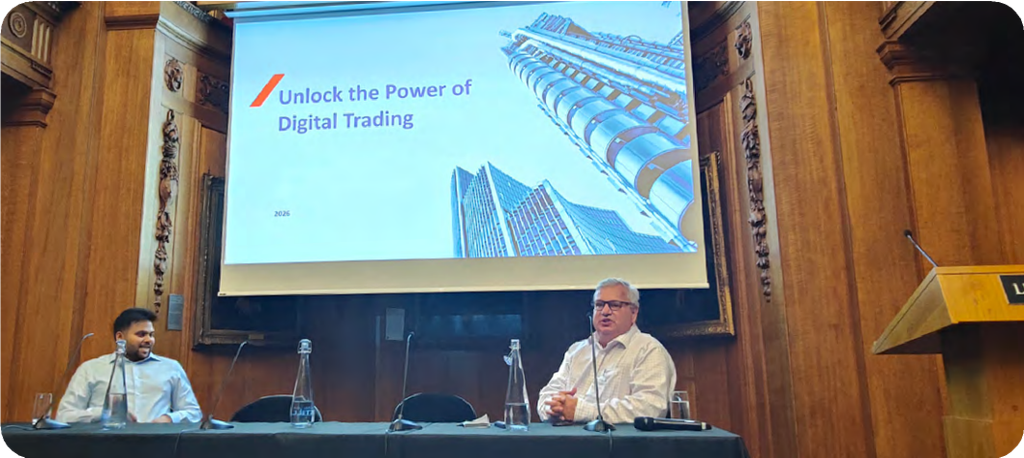
There’s also a competitive reason not to wait: the rise of digital follow. Brokers are building standardised digital facilities, and algorithmic followers like Ki can quote from structured data in hours.
“If you’re a traditional follower still using unstructured data and old-fashioned processes, and you can’t come back with a quote in under 24 hours, you’re going to lose out.”
Over the last ten years, operating costs have gone up by 30%. Far from getting cheaper, the market has just got more expensive. For the first time ever, if the market moves to data standards and direct connectivity, it could turn the dial back. Tim Pledger of Swiss Re, founder of the Ruschlikon Blueprint Two group, adds that Ruschlikon participants have already turned that dial back: “If the London market doesn’t catch up and reduce operating costs using standardisation and associated automation, business may be lost to other territories,” he says.
What next?
Perhaps the most encouraging shift has been taking place behind the scenes: the largest brokers have started adopting the standards. Tim Pledger points out that Aon, Marsh, Guy Carpenter (Marsh Re) and Willis are now all engaged with ACORD messaging across insurance and reinsurance.
That kills a long-standing excuse. Carriers have traditionally said they’d go digital as soon as brokers supplied the data. “Well, the brokers are willing to supply it,” Pledger says. “We’ve now got to be able to use it.”
Benefits for brokers
Although the event was aimed to a large extent at LMA members and carriers, Pledger is keen to emphasise the benefits for brokers, in particular the substantial reduction in queries coming back to them, as well as the increased speed of claims settlement which benefits their clients.
“This needn’t be costly for brokers. If they set up a structured data capture (SDC) service, they could run a simple version of ePlacing very cheaply. Combine that with existing services that convert documents into ACORD messages for accounting and claims, and they’d have a complete end-to-end solution – not fully integrated, but enough to start the journey,” Pledger adds.
Pledger is candid that the market has made trade-offs along the way. The original CDR vision was a central record that services could interrogate to automate processing; the incremental CDR, he notes, delivers bilateral data exchange through the placement cycle. This is hugely valuable, but not yet that central engine.
His response, though, is a to-do list rather than a lament: use the market’s structured data capture service so “everyone’s got the same data right up front.” Encourage a long-term plan from central services that embraces ACORD messaging and, eventually, a hosted contract record to automate processing end to end. Fifteen years of Ruschlikon eAccounting shows what that patient, standards-first route can deliver: “We’re just starting that journey on ePlacing.”
Which brings the day full circle. The standards exist. The gateways are live. The case studies are public, shared freely by competitors, and the C-suite is finally asking about them unprompted.
What remains is the very human work of adoption: the mindset shifts, the management commitment, the willingness to change a process you’ve trusted for twenty years.
“Unless you’re in amongst all the operational toil, you probably don’t understand how transformational this can be.”
Conclusion and key takeaways
Across the day, several threads kept resurfacing.
- The standards argument has been won, and there’s plenty of evidence that it works. The Ruschlikon community’s metrics – however anecdotal – and the 18-year Swiss Re-Guy Carpenter partnership demonstrate that GRLC messaging works at scale, across premium, claims, queries and settlement. It pays for itself in cash flow, data quality and eliminated rework.
As Joe Brace put it in his end-of-day wrap-up: “It’s a hell of a lot easier to see what someone else has done than to do it from scratch.” The tools and the case studies are there. That’s the point of the community the day showcased: learning from each other, making common cause, hearing how we solved the problem rather than facing it alone. - Adoption, not technology, is the constraint. The most repeated cautions concerned business process change, mapping, testing, external dependencies and organisational change management. The most successful implementations were those in which the standard became invisible to practitioners.
- Convergence between the post-bind and pre-bind worlds. Ruschlikon started at the back office and is working forward. The CDR, once live, will start at placing and work backward. Both meet in the same vision of one interconnected digital transaction, linked end to end, with no departmental silos and a single view of the truth shared by client, broker and carrier, with every ambiguity taken out. And that vision runs right through to settlement. “We don’t want to move the wrong money to the wrong place,” Brace reminded the room. “Money is only data. Think about the processes, the data and the controls that are in there.”
- AI won’t fix the London market, only industrialise its inconsistencies. Feed it PDFs, rekeyed data and broken processes and you just get wrong answers delivered faster, at scale and with more confidence. Every speaker who touched the subject said the same thing, and the market should hear it as an instruction. The unglamorous standards work everyone keeps deferring isn’t the alternative to an AI strategy. It’s the price of having one.
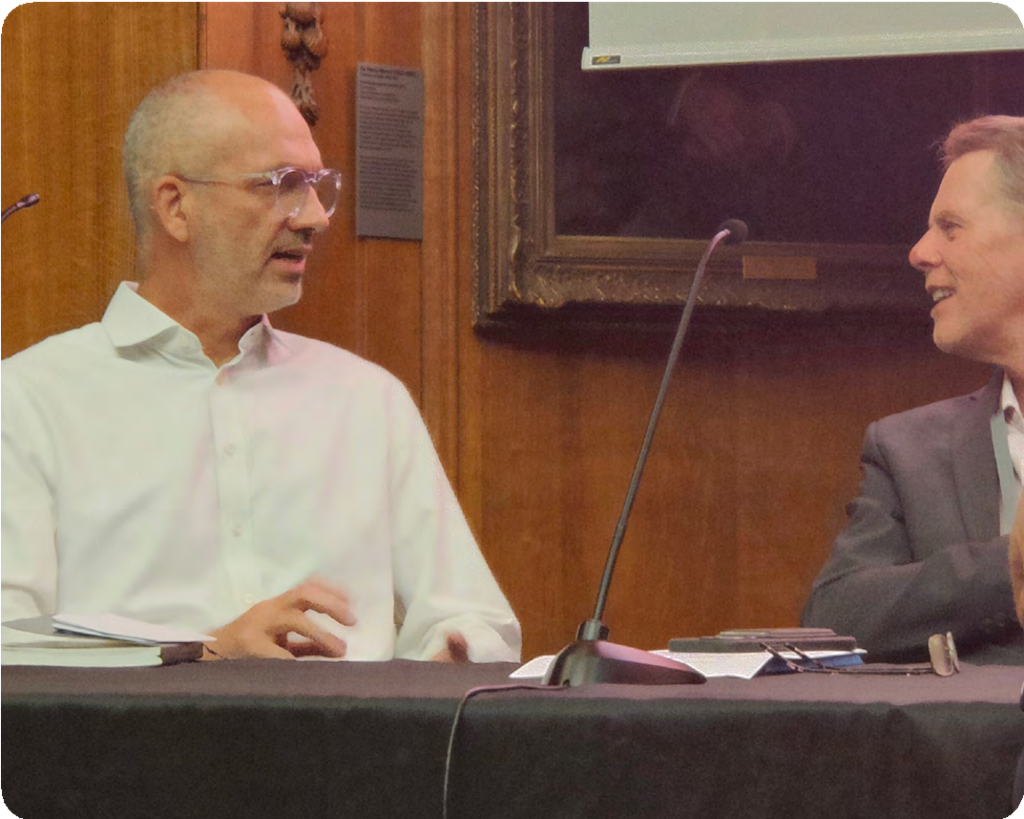
“AI is built on data, that’s the foundational layer that sits underneath it,” said Brace. And, he stressed, “none of this takes the human out of it.” The day-to-day oversight, the analysis and the controls remain human work: automated processing, but with reports and human control wrapped around it.
Brace closed with a carrot and a stick. The stick: nobody wants to be left behind.
“If you do the things we’ve talked about today, you’re preparing for that future world. If you haven’t, you’ll be standing still while everyone else is jogging and warmed up. You can see the direction this is going.”
The carrot was an appeal to ambition beyond cost: “Cost is a thing. But we’ve got to lift our eyes higher” towards the underwriting and risk gap, and the time everyone could free up for conversations about new products.
His parting advice was practical. “Don’t try to boil the ocean.” Eighty percent of the market’s premium comes through the top 10 brokers, so start with your biggest client, have a chat and be intentional about what you’re trying to achieve. And talk to your associations.
If this event was a barometer, it suggested a market that knows what good looks like, can point to partners who have built it, and now faces the less glamorous but more consequential task of making it everyone’s normal way of trading.
Quotes in this report are drawn from the event sessions and from follow-up interviews conducted with speakers and market participants in July 2026. With thanks to all interviewees.
Resources
- The LIMOSS (London Insurance Market Operations and Strategic Sourcing) website: https://glossary.londonmarketgroup.co.uk
- Visit the Ruschlikon page on the ACORD website to find case studies and sign up for the e-newsletter: www.acord.org/standards-architecture/ruschlikon
- The London Market Group’s Data Council website: www.lmg.london/digital-market